
This post may contain affiliate links. Please read my disclosure policy.
I’m so excited to share with you the first-ever installment of our brand new Q+A series: Clean Living Conversations. This has been a little passion project of mine for months now, and I couldn’t be happier to finally see it coming to fruition! In each interview, you’ll have the opportunity to take a peek behind the curtain of some aspect of the wellness world. I’ve invited some of the people I most love to learn from and work with to join us for this series. I can’t wait to introduce you to them!
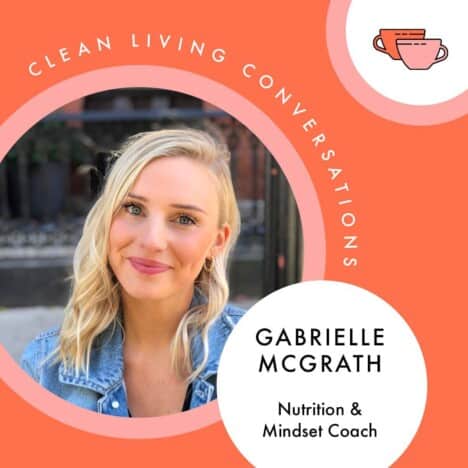
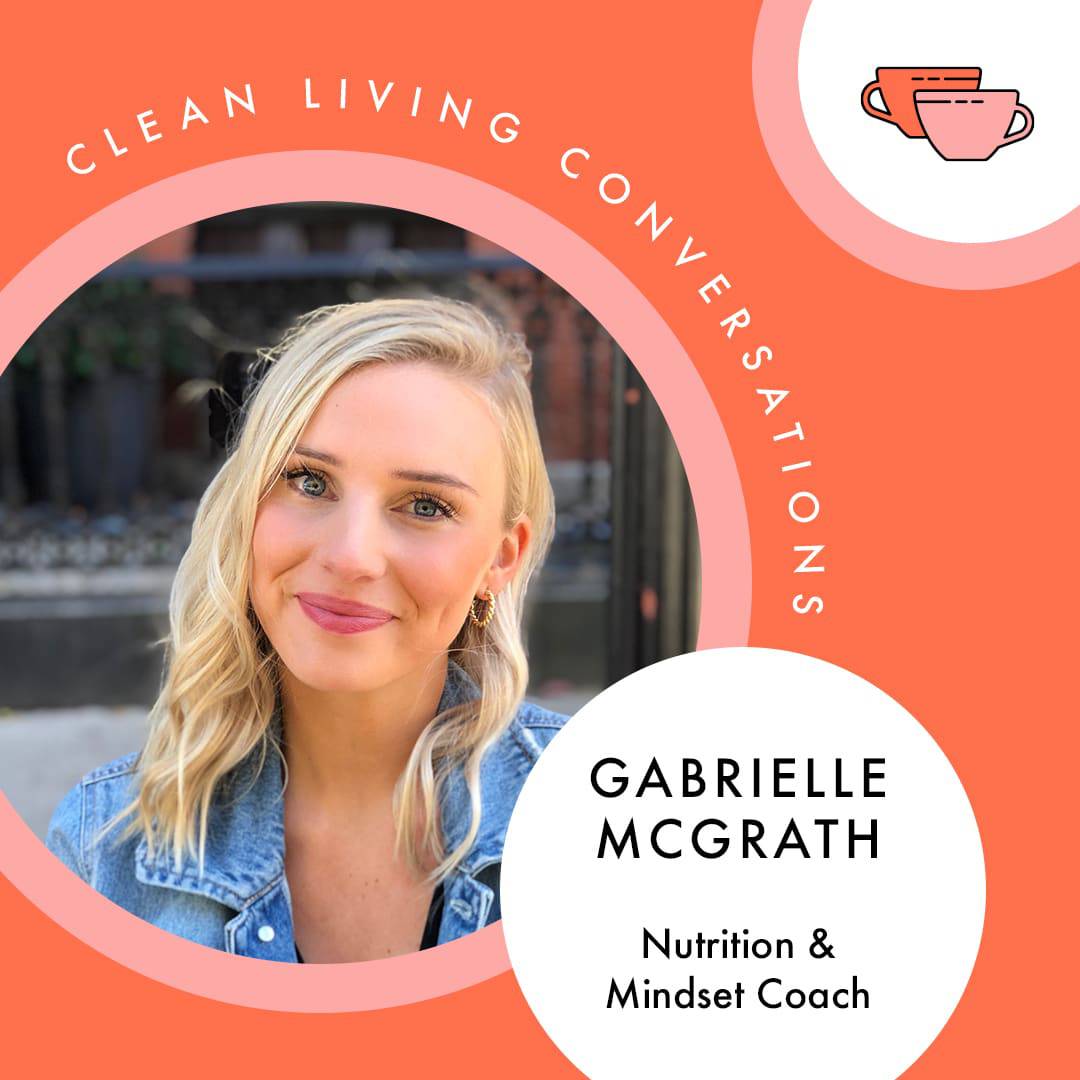
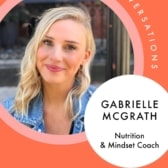
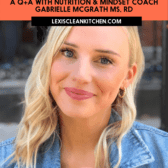
I can’t think of a better person to help me kick off Clean Living Conversations than Gabrielle McGrath. I met Gabrielle years ago and we instantly hit it off. If you’ve been part of the LCL community for a while, you may already know her as our go-to girl for all things nutrition. (We call her Gabby around here!) Gabby is a registered dietitian nutritionist and a Nutrition and Mindset Coach. She is also the founder of the amazing Wellpower Method, a program that allows individuals to stop dieting and restricting, find peace with food, fuel their body, unlearn unwanted behaviors and embody new ones, and reach their sustainable weight loss goals.
I can’t imagine LCL without Gabby on the team, and I’m so excited to give her a chance to tell you more about the work she does as our in-house nutritionist and with the Wellpower Method. Keep scrolling to learn more about the fabulous Gabrielle McGrath and her thoughts on diet culture, loving your body, establishing a healthy relationship with food, and so much more.
Unlearning Diet Culture
A Q+A With Dietitian & Nutritionist and Mindset Coach Gabrielle McGrath
What inspired you to become a dietitian? How did you get to where you are today?
I have always loved food and taking care of people. Little did I know until my undergraduate career, though, that there was a field of work that would allow me to heal people through food! I fell more and more in love with the idea of becoming a dietitian through each course, training, and job I took on. I worked in hospitals, long-term care, food science, research, community-based nutrition, and more. There was something about each environment that I loved and never got sick of.
Still, I noticed that there was always one major aspect of [wellness] that wasn’t being addressed: the behavior side of nutrition. In order to have a long-term impact on an individual’s health and wellness, you need to address WHY they do or don’t do something, WHY they have certain thoughts, WHY they have an unhealthy relationship with food and their body, WHY they don’t enjoy moving their body, [and] WHY they feel a certain way. It’s also crucial to bridge the why to the how. HOW can this individual shift their mindset, reach their nutrition and wellness goals without giving up what they love, enjoy moving their body, and live the life they’ve always dreamed of? We solve the “how” by creating behavior-based goals, implementing them into [an individual’s] lifestyle, and sticking with them. This is where a healthcare professional — like a dietitian nutrition coach [like me!] — steps in to individualize their nutrition plan, find their why and how, create behavior-based goals, provide accountability, and create forever change.
This is where I stepped in to fill the gap and create my own nutrition coaching program for individuals feeling lost and looking for long-term change. The long-term impact I make on clients each and every day is what fuels my happiness and passion.
Tell us more about what you do here at Lexi’s Clean Living! What is your favorite part about being on the team?
I am the in-house dietitian, and I wear many hats. I create meal plans that live on the site, made up of exclusively LCL recipes. If you haven’t checked them out already, I highly suggest taking a peek! I also do the nutrition facts panel for all of the recipes, manage our Facebook and Instagram pages, help with newsletters, act as a resource for the community for any nutrition-related questions they may have, and more.
My favorite part of being on the team is working with Lexi, Kelli, and Alli. Working alongside such intelligent, motivating, inspiring, hardworking, and caring women is truly incredible. I learn so much from each of them and I feel excited to do LCL work every single day. The impact that our whole team makes on [the community’s] health and wellness is a dream come true and we couldn’t do it alone. I wouldn’t trade it for a thing.
You’re also the founder of the Wellpower Method. Tell us how that started and what it means to you.
Besides my six years of experience in the clinical, community, research, community, counseling, and food service sides of nutrition, I am qualified to help my clients because I was them. I don’t have what some call “skinny privilege.” I grew up with an unhealthy relationship with food and struggled immensely with emotional eating and weight gain.
When I first started in the nutrition industry, I was not practicing what I now preach. In fact, I was doing quite the opposite. This was when I realized an important piece of the puzzle I was missing. With a wealth of knowledge and experience behind me, I was still trying every diet to lose weight (even though the science told me it wouldn’t work), gaining weight, binge eating at night, taking my emotions out on food, and hating my body and my relationship with food.
Fast forward years into my career, when I decided it was time to do something about my own relationship with food and my body. I read numerous books about binge eating, emotional eating, strengthening your willpower, and building a healthy relationship with food. I had to unlearn so many learned behaviors I adopted while growing up with my family and going through middle school and high school as a teenage girl within diet culture, along with what college social life had done to me, and so much more. I learned how to build actionable solutions into my own lifestyle, combined them with my science-backed education, cut out ALL dieting and restricting, and have since checked off so many health-related goals I dreamed about since I was a teen. I am so much happier and more confident, motivated, and successful. I’m even less stressed.
I took all of the major learnings from these readings on the emotional and behavioral sides of wellness, then combined them with my own experience, struggles, education, and training to create the Wellpower Method. It has completely changed my own life. I’ve actually walked the walk!
What tips would you offer to someone who feels overwhelmed by all of the (ever-changing) information available out there about nutrition? How can we sort through it all?
The media can be so overwhelming, so I have a few things I want you to keep in mind…
- Don’t make any major changes to your nutrition or diet unless you’ve consulted with a health professional.
- All foods can fit. I do not suggest following any diet that cuts out a food or food group unless are dealing with health issues, have intolerances/sensitivities, or are allergic to. It will cause you to have a ‘good’ versus ‘bad’ mentality and to create an unhealthy relationship with food.
- Ever-changing trendy topics in nutrition are often trendy for a reason. They come and go. While it’ important to stay up-to-date on new research and topics in nutrition, you’re often better off sticking to the advice that always stays true: eat more whole and less processed food, whole grains, healthy fats, lean protein, colorful fruits and veggies; choose the more nutrient-dense option when you can; drink more water; and eat a balanced diet.
We hear the word “balance” a lot when it comes to food. What does having a balanced relationship with food mean to you?
To me, a balanced diet fuels you mentally, emotionally, and physically. An ideal balanced meal contains carbs, protein, fat, fiber, and lots of micronutrients. I tell my clients to fill their plates with whole grains (or a starchy vegetable, if they can’t tolerate grains), lean protein, fat, fruit, and/or vegetables. Most importantly, a balanced meal and diet is SATISFYING. It tastes good, smells good, fills you with energy, and makes you feel good — and you look forward to eating it! If you are eating a lunch that is considered healthy but you don’t actually enjoy it, then it’s not healthy!
What is the difference between engaging with diet culture and developing a healthy relationship with food? What advice would you give to someone who wants to leave dieting/restricting behind for good?
Diet culture exists throughout our society in different ways — people discussing their newest diet to lose weight, the vicious cycle of thinking “I’ll start my diet Monday,” linking self worth to weight, ads for weight loss products, diet programs that tell us we are not already skinny and muscular, comparing our bodies to others, and so on. I would encourage you to avoid discussing your weight or weight, in general. You don’t know why a person has lost or gained weight and your commentary on your own body may hurt someone else’s feelings. Weight should just not be a topic of discussion because it doesn’t define you. I also suggest avoiding any companies that are selling you quick fix weight loss supplements, food, or programs. They may work initially, but their products will create a negative mentality and you will likely gain the weight back — or even gain more — in the future, since you did not address the root of your unintended weight gain or find a long-term solution.
There are companies that promote products and recipes with labels like “Keto.” You want to be careful with products on the shelf that are labeled within a certain diet because that doesn’t mean those products are automatically nutrient-dense or worth spending the money on. When looking at packaged goods, look for whole food products with high fiber, protein, and/or nutrients. On the other hand, there are recipe developers who label their recipes with certain diets. This can be a wonderful resource for people with allergies and intolerances.
There are also many “diets” — or what I would consider “lifestyle changes” — that allow individuals with intolerances to learn how to seamlessly cook at home and eat out while avoiding certain food components, like gluten or dairy. Sometimes, these “diets” even help you determine what foods are your personal triggers and intolerances, such as low FODMAP or Whole30.
All of that being said, there is nothing wrong with making recipes or following meal plans that allow you to add in more nutrient-dense options to your diet. For example, Paleo recipes are often more rich in fiber, protein, and micronutrients than your average recipe — which is great! Learning to prepare meals, snacks, and desserts that are lower in sugar and refined products and higher in nutrients is wonderful.
It’s also important to know when to draw the line. When you don’t eat the keto version of the recipe, it’s not “unhealthy.” As long as it offered you some form of nutrition and you enjoyed it, it’s healthy in my book. I want it to be healthy in yours, too, because your mentality needs attention.
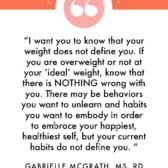
I want you to know that your weight does not define you. If you are overweight or not at your “ideal” weight, know that there is NOTHING wrong with you. There may be behaviors you want to unlearn and habits you want to embody in order to embrace your happiest, healthiest self, but your current habits do not define you.

What is your number-one tip for people who are experiencing low energy? How can they jumpstart their energy with nutrition?
Balance out your breakfast, lunch, and dinners with whole grains (or starchy vegetables, if you can’t tolerate the grains), lean protein, fat, fruit, and/or vegetables. You are often low on energy because you are under-fueling yourself from restricting.
Here’s a balanced breakfast for example: oats (whole grain), nut butter and hemp seeds (fat and protein), and berries (fruit)
How do you think a positive relationship with food and your body can impact other areas of your life?
Creating a positive relationship with food and your body will remove the anxiety around eating, drinking and indulging with friends, exercising, having to get dressed up for an event, wearing a swimsuit to the beach, and so on. It’s allowing yourself to have more room to appreciate the true joy around food, nourishing your body, and cooking. It’s being okay with going on a daily walk as your form of exercise and not NEEDING to do a dreadful 60-minute intense workout to feel like you exercised. It’s learning to enjoy movement, mindfully preparing delicious meals, and finding peace in stillness. A positive relationship with food and your body allows you to have a better relationship with your partner, kids, family, and friends, because you are happier with yourself and all-around less stressed. You will feel more confident, ambitious, and excited to simply wake up each day. You will no longer feel scared, worried, or overwhelmed deciding which diet you’re starting on Monday, or hate the way you ate over the weekend. It allows you to find balance and happiness in the decisions and progress you make with zero restrictions or guilt. A positive relationship with food and your body allows you to LIVE.
What do you wish every person knew about food and wellness?
Restriction leads to attraction. When you remove things from your diet, it creates anxiety for most people. We are attracted to anything that retreats from us, especially food. As humans, on a physiological and psychological level, we crave what we “cannot” have. Research shows that people who go on diets and restrict foods gain more weight over time than those who don’t diet at all. Why? Because those who diet suppress thoughts about food more than those who don’t diet. When you suppress thoughts around food, you have less control around food. You experience more intense food cravings and are more likely to binge or overeat.
And now it’s time for our Clean Living Conversations signature questions. You’ll find these questions in every installment of this Q+A series!
What is one thing that is guaranteed to make you laugh? A super cheesy dating series. I mean, have you seen “Are You the One?” Talk about cringe-worthy humor! It’s currently on Netflix if you need something to do on a Friday night.
What is your go-to lazy meal? I always have chicken sausage in my freezer and whole grain pasta in the pantry, so I’ll cut up the sausage, toss it with whatever veggies I have on hand, plus olive oil and seasoning. I’ll throw it all together!
What’s one assumption about the wellness industry that you’re tired of hearing? That a one-size-fits-all diet plan is ever the answer!
Finish the sentence: I never leave home without… rose sheer lipstick. I can pair it with sweats or heels!
What is the best book you’ve read this year? Signs: The Secret Language of the Universe by Laura Lynne Jackson
What is the best podcast you’ve listened to this year? Oprah’s Super Soul Conversations
Thanks so much to Gabby for being the first guest on Clean Living Conversations! Follow her on Instagram @wellbygabrielle, check out her Facebook community group, and learn more about the Wellpower Method here. Want to work with Gabby? Send her an email!
This was such a helpful article! Thank you for taking the time to do all of this and provide such wonderful information about diet culture and how to be comfortable in who you are. Do you have plans to create a pregnancy meal plan? Since nutrient requirements go up during pregnancy I think this would be helpful to have a baseline.
I’m so happy you loved it! We actually have 2 pregnancy meal plans and two postpartum! Find them here: https://lexiscleankitchen.com/meal-plans/